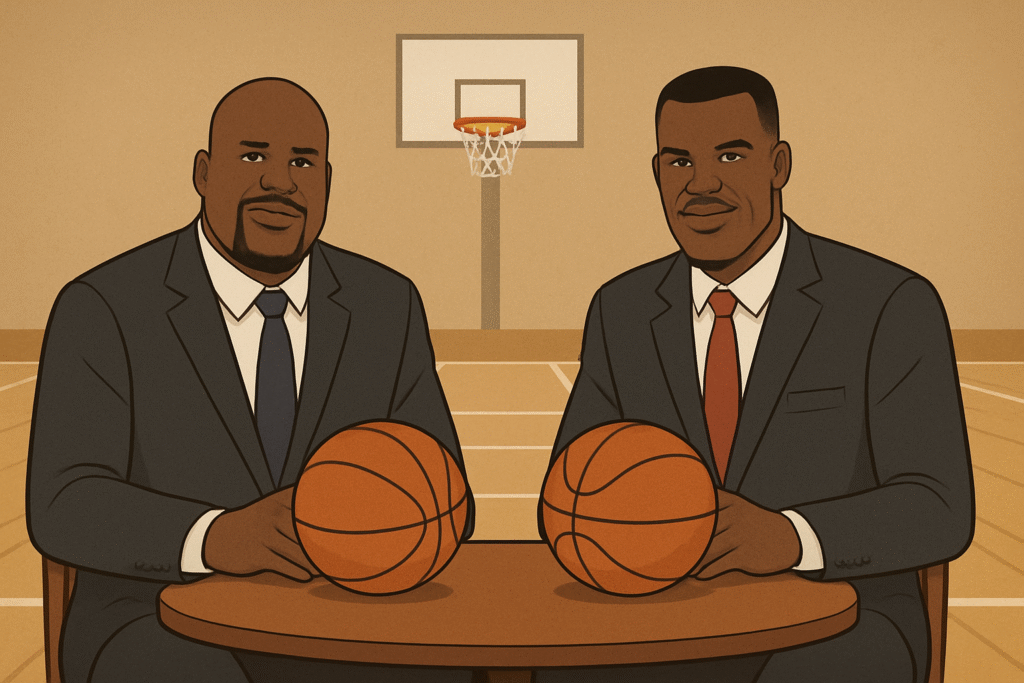
Two stars in the same universe never follow the same path. Both shine, but each illuminates the sky in its own way.
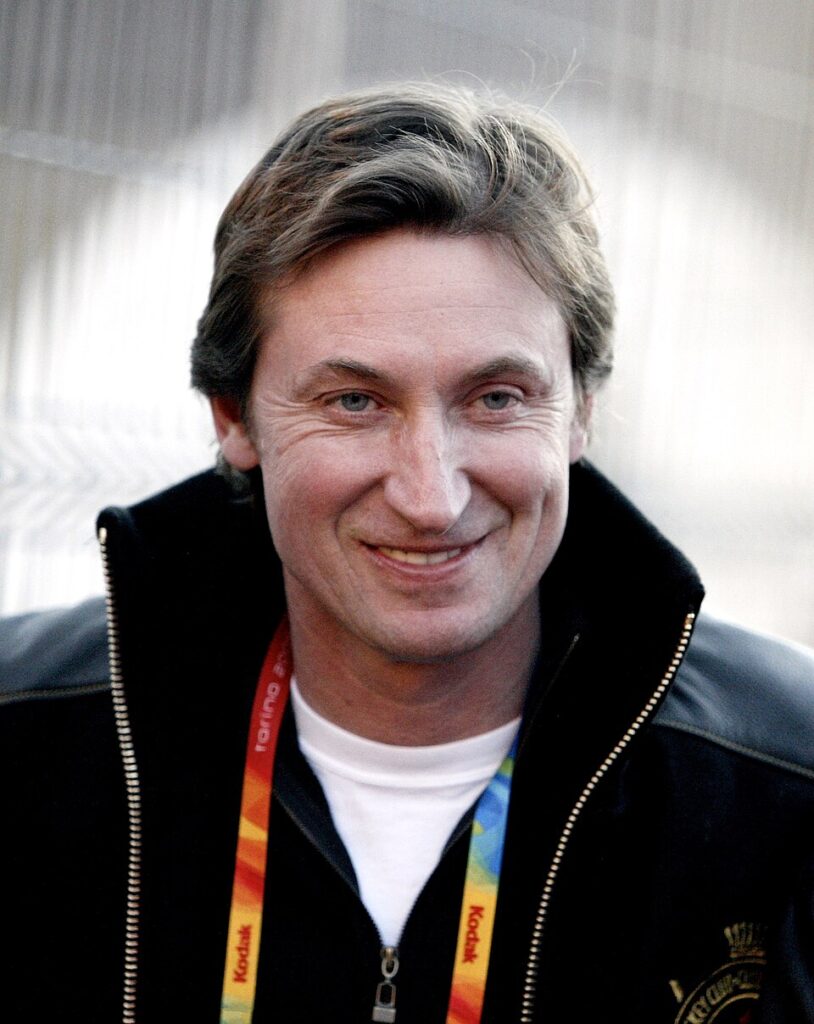
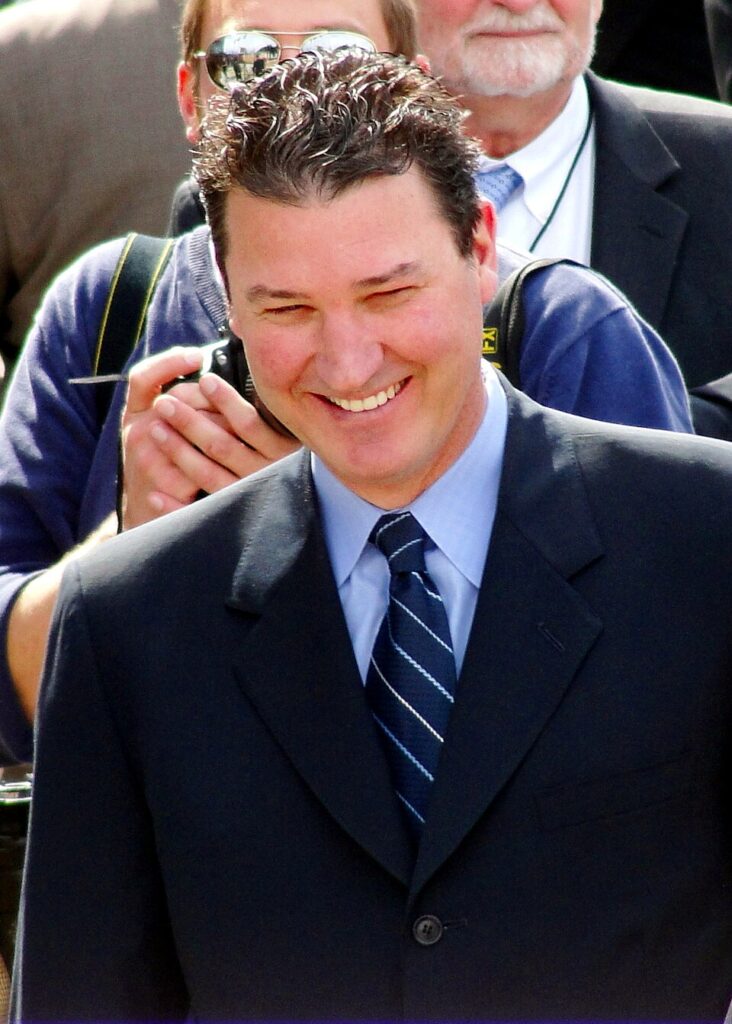
In our Versus series, we compare entities from the world of sports, and let us say in advance: this is not an attempt to answer the fan-favorite question of who was better. We are simply looking for contexts within the relationship the participants form with one another.
If we’re talking ice hockey and the NHL, it’s hard to find a more emblematic matchup than this. It’s as if we were placing two mythological deities side by side—Odin and Zeus.
Following another analogy, the king (Gretzky) and the prince (Lemieux) also fits quite well. Gretzky didn’t just leave his signature on the league, he poured gold into wet concrete; to me, he embodies the NHL’s awakening to its own identity. Lemieux, meanwhile, is still regarded by many as the most naturally gifted player of all time, both technically and in terms of Hockey IQ.
Whenever players with this kind of gravitational pull meet—whether as teammates or as opponents—it becomes a delicacy for fans and the sports media alike. Regardless of era or platform, every piece of news or coverage inevitably orbits around their showdown. And let’s be honest: most sports lovers (myself included!) consume it the way a chubby kid devours the vanilla pudding he just stole from the fridge.
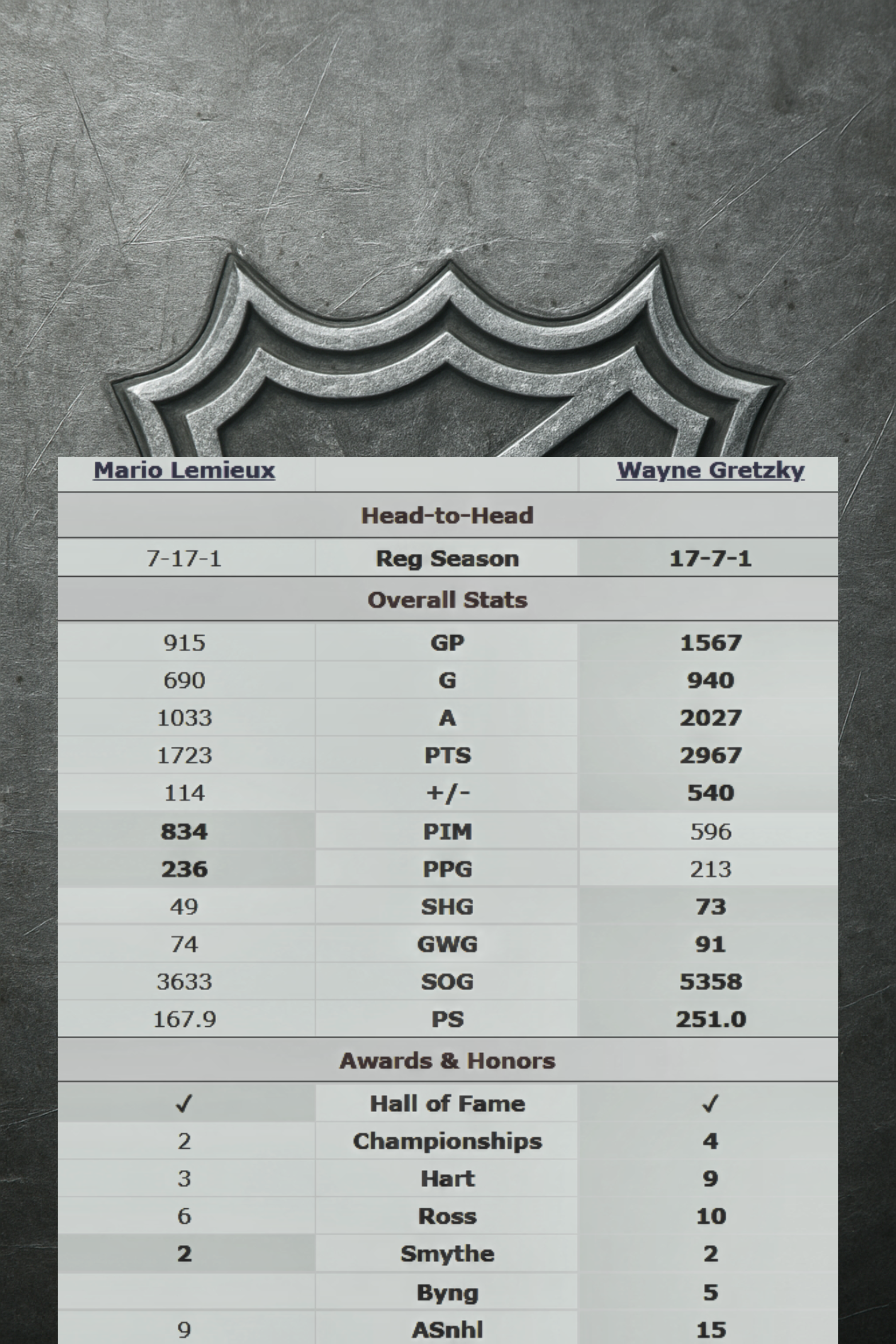
Combined results
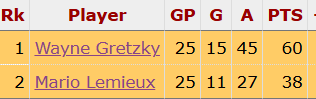
Over the course of their NHL careers, they faced each other 25 times in competitive games. Their meetings ended with a slight edge for Gretzky (17–7–1), as he came out on top in 17 of those matchups. It’s interesting that they never met in the playoffs—though because they played in different conferences most of the time, the only real chance for that would have been in the final.
Lemieux spent all 17 of his seasons in the league as a member of the Pittsburgh Penguins, while Gretzky met him as a player for Edmonton, Los Angeles, St. Louis, and the New York Rangers.
Lemieux averaged 1.52 points per game with 11 goals and 27 assists, while Gretzky finished with a 2.4 points-per-game mark, recording 15 goals and 45 assists.
The first meeting
Their first time facing each other came on November 6, 1984. In the theaters, the buzz was still going strong from the summer release of Ghostbusters, and the somewhat dimmer start—but later cult classic—The Terminator was also making its first appearance on the big screen around this time (October 26, 1984).
Pittsburgh’s Civic Arena hosted the event. The Oilers arrived with a 10–0–2 record, meaning they were undefeated, with only two ties, while the Penguins stood at five wins and five losses.
In today’s NHL it feels strange to call a regular-season game a tie, but under the rules in effect back then, a tied score meant a five-minute overtime, and if it was still tied afterward, the game simply ended as a tie.
After a five-minute overtime, the game ended 3–3 between the freshly drafted first-overall pick Lemieux and Gretzky, who was in his sixth season and—almost unbelievably—already had more than 700 career points.
They entered the third period at 2–2, and around the 10-minute mark Lemieux set up Warren Young to give the Penguins the lead, only for Gretzky to answer six minutes later with a goal that set the final result.
Two things from that 1984–85 season absolutely need to be mentioned. One is that Lemieux, in his rookie season, recorded 100 points—which is pretty impressive, or to put it another way, not exactly a bad performance. The other is that at the end of that season, the Oilers became back-to-back Stanley Cup champions, beating the Philadelphia Flyers 4–1 in the final, and unlike the previous year (the 1983–84 season), this time it was Gretzky who received the Conn Smythe Trophy as the playoff’s most valuable player (Mark Messier had earned it earlier).
#OnThisDay October 14, 1979
— On This Day in Sports (@SportsHistoryD) October 14, 2025
Wayne Gretzky scored his first-ever NHL goal, tying the game at 3 with just over a minute to play. pic.twitter.com/01jM001clL
Mario 7, Wayne 6
March 26, 1996 — the day Lemieux scored five goals against Gretzky and the St. Louis Blues, a team loaded with incredible names, several of whom we now regard as legends: Brett Hull, Al MacInnis, Dale Hawerchuk, Chris Pronger…
Gretzky was 35 at the time and had joined the Blues mid-season, playing his first game with the team on February 29, 1996—so he had been on the roster for less than a month.
The reason for the move included the Los Angeles Kings’ poor performance, disagreements between the team management and Gretzky, as well as financial considerations.
Everyone could reasonably have assumed this Blues team was a Stanley Cup favorite, and they were—but they fell short in the Conference semifinals against the Red Wings. Even though they had led the series 3–2, in Game 7, after double overtime, Steve Y’s goal dashed St. Louis’s Cup dreams as decisively as a librarian sweeping dust off a book nobody had ever used.
Well, I really went off on a tangent there, like a teenage boy staring at the treasures of the fairer sex, because this part is about Lemieux, who finished the game with five goals and two assists, sending the Blues home with an 8–4 victory.
You couldn’t say the guys were stingy with goals—after the first period, the score was already 3–2 (Lemieux with 2 goals and 1 assist). In the second period, he quickly added two more, one of them shorthanded, while Pronger responded with a goal, assisted by Gretzky—his only point of the game.
In the final period, Lemieux still added one goal and one assist.
1. Lemieux was so dominant that games like this one (5 goals) weren’t really THAT big of a deal.
— Rob Rossi (@Real_RobRossi) March 27, 2024
2. I always wondered what his shooting percentage was on breakaway. If there had been 3 on 3 hockey, he might have scored 100 more goals. https://t.co/0uOrvxXJNz
Of course, this wasn’t the only game in which he scored five goals, nor his most famous. On December 31, 1988, against the New Jersey Devils, he produced what is now known as the “five-goal, five ways” performance: scoring at even strength, on the power play, shorthanded, on a penalty shot, and into an empty net.
Since I’ve mentioned the Blues’ elimination, it’s only fair to note that Pittsburgh didn’t win the championship either that season—they lost in the Conference Finals to the Florida Panthers in Game 7.
Going back a bit in time to October 31, 1989—again in Pittsburgh at the Civic Arena—Gretzky, playing for the Kings, put on a spectacular performance with 3 goals and 3 assists, lighting up the Pittsburgh sky with the number 99.
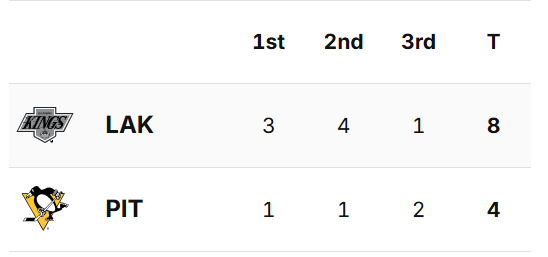
Los Angeles defeated the Penguins, who were off to a rusty start that season, 8–4.
Again, the little quirks of history and its hidden treats: both players won their highest-scoring games against each other by the exact same score—8–4.
For Gretzky, this marked the 46th hat trick of his career.
In the 1989–90 season, Gretzky’s former team, Edmonton, eliminated the Kings, while Pittsburgh failed to make the playoffs. Nevertheless, Gretzky recorded 142 points in 72 regular-season games, while Lemieux tallied 123 points in just 59 games.
Nines Turned Upside Down
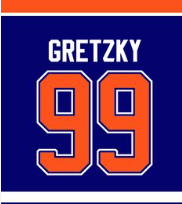
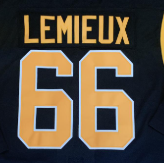
Even before Lemieux was drafted, people were already comparing him to Gretzky — and no, it’s no coincidence that those nines ended up flipping over.
The 66 is simply the 99 turned upside down. In an interview, Lemieux said he wanted a jersey number that was very rare in the league. At the time, as a junior, he had the same agent as Gretzky, and that agent asked him: “Why not take 99 and flip it upside down?”
This, too, ties the two legends together. If someone were ever to combine their abilities into one NHL video game character, they might as well name him Wayne Mario and give him the number 69… or would that be a bit too erotic?
(Not many players have worn the number 69, by the way; among them, Andrew Desjardins is undoubtedly the most recognizable name.)
Pointless
It was extremely rare, throughout their head-to-head history, for a game to go by without at least one of them registering a point. There was never a single occasion where both of them were held scoreless, and only six times did it happen that either one failed to record at least a point.
Lemieux had five such games; Gretzky had only one — on February 19, 1988, when Edmonton beat Pittsburgh 7–3. You might wonder how the Oilers scored seven goals while Gretzky remained pointless, but the truth is that he was injured early in the game: he took a stick to the eye and had to be taken to the hospital afterward.
Another interesting detail: in that game, Gretzky was just one assist away from passing Gordie Howe for first place on the NHL’s all-time scoring list, so that record had to wait a little longer. And as if that weren’t enough, Lemieux also picked up an injury in the same game when he took a puck to the face.
On the same team
It’s an extraordinary thing for the entire sport — and for sports history in general — when people get to see two talents of this magnitude playing side by side. I’m too young to have witnessed these games as they happened, but I know the sport well enough to understand the weight of it.
In the 1987 Canada Cup, they represented Canada as teammates, and they even played on the same line. Canada went on to win the tournament, but it wasn’t as easy as one might think, even with 12 future Hall of Famers on the roster.
The tournament itself was held only five times in total. Its purpose was to create an international hockey event in which NHL players could participate — since for a long time the Olympics weren’t an option — and the world needed a stage where these players could showcase their abilities in national colors. Not to mention that for an athlete, there’s hardly anything greater than playing in the jersey of your own country.
The 1987 edition was the fourth tournament organized through a collaboration between the Canadian Hockey Association and the NHL. Here’s a quick rundown of the winners of the other editions:
- 1976 — Canada, with Bobby Orr as MVP
- 1981 — Soviet Union, Vladislav Tretiak MVP
- 1984 — Canada again, John Tonelli MVP
- 1991 — Canada, Bill Ranford MVP
I only wanted to list all of this because, looking back, the history of the Canada Cup is like a box of chocolates… no, I wasn’t trying to drop a Forrest Gump quote here, but it really is like a box of chocolates — not because you never know what you’re gonna get, but because it’s full of delights.
Six teams took part in the tournament: Canada, the United States, Finland, Sweden, Czechoslovakia, and the Soviet Union. In a round-robin group stage, every team played each other once; a win was worth 2 points, a tie was worth 1. The top four teams advanced to a single-elimination semifinal (first vs. fourth, second vs. third), and the final was played in a best-of-three format.
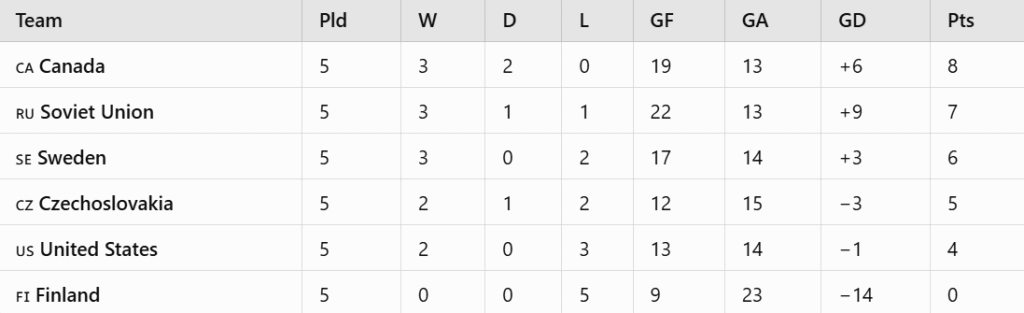
After the round-robin stage, the semifinals were Canada vs. Czechoslovakia and the Soviet Union vs. Sweden. The Soviets marched confidently into the final with a 4–2 victory thanks to goals from Krutov, Bykov, Larionov, and Makarov. Canada, meanwhile, came back from a 2–0 deficit after the first period. They won the second period 3–0 thanks to a goal from Dale Hawerchuk and a pair from Lemieux, and in the final frame they added two more past Hasek to seal a 5–3 victory.
I mentioned that Canada didn’t have it easy, and there’s a reason I said that. Nothing demonstrates the strength and skill of the Soviet team at the time better than the fact that they played such a tight, back-and-forth series against a Canadian team of that caliber. They didn’t just hold their own—the final outcome hung by a thread, and the result could easily have gone the other way.
It’s no exaggeration to say that what they produced in this final was pure hockey porn—the term used here in its best sense: a nail-biting, edge-of-your-seat, adrenaline-fueled sporting orgy. Apologies to our more restrained readers…
The Cup was decided over three games, each ending 6–5. One was decided in regulation, while the other two went into overtime—one requiring a single OT, the other extending into double OT.
Game 1 (Sept 11)
The Soviets quickly built a 4–1 lead, thanks in part to goals from Krutov and Makarov. Canada gradually fought back, with goals from Bourque, Gilmour, Anderson, and Mike Gartner leveling the score. Gretzky even gave Canada a 5–4 lead, but Andrei Khomutov tied it up in the end.
Regulation ended at 5–5, sending the game into overtime.
Decisive moment: Alexander Semak scored at 65:33 to give the Soviets the victory.
There were standout performances on both sides. For the Soviets, Makarov and Krutov led the offense, while Fetisov contributed two assists. For Canada, Gretzky and Lemieux played key roles in the comeback, but in the end, it wasn’t enough for the win.
Game 2 (Sept 13)
Many consider the second game to be the greatest hockey match of all time, and it’s hard to argue with that. A key element in any great game is the stakes, and this was a final—played in national colors, no less. Considering the political backdrop, it’s easy to see why hearts were racing even more.
The first period began with Canada leading 3–1. In the second, Fetisov scored on the power play and Krutov on the penalty kill to tie the game for the Soviets. Lemieux responded before the period ended, and the entire match turned into a back-and-forth struggle: Canada would pull ahead, only for the Soviets to equalize. At one point it was 4–3, then 5–4, and ultimately the game went into overtime tied 5–5.
Decisive moment: In the second overtime, Lemieux scored, giving Canada the win and creating something truly legendary between the teams.
Fans lived every moment of the match—they sweated through their clothes and hoarse-voiced from shouting.
On the ice, Lemieux recorded a hat trick while Gretzky notched five assists, saving Canada in overtime. Throughout the tournament, the two of them seemed to feel each other perfectly, as if they had always played together.
Game 3 (Sept 15)
The third game—essentially the “final of the finals,” the seventh game… well, those who love the NHL will understand—must have been a nerve-wracking start for Canadian fans. After just eight minutes, the Soviets led 3–0, and by the end of the first period they were ahead 4–2.
In the second period, the Maple Leafs shook themselves off and turned the game around with goals from Larry Murphy, Brent Sutter, and Dale Hawerchuk, taking a 5–4 lead. In the final frame, the relentless Red Knights once again equalized, and shortly before the end, the score was tied 5–5.
Decisive moment:
Gretzky, Lemieux, and Larry Murphy sped up the ice. The only Soviet defender back, Igor Stelnov, fell while trying to block a cross-ice pass. Gretzky returned the puck to Lemieux, who, at 1:26, shot it over goalie Sergei Mylnikov’s glove into the net. The Gretzky–Lemieux play is one of the most memorable moments in Canadian sports history.
Eyes are red, hearts are racing, and the memories stay with those who experienced it. There are many major sporting events every year, but it’s rare to find one where all the elements come together: the best bring out their best, the stakes are high, and when national colors are involved, it all becomes a little more than just a sport.
Gretzky was named the tournament MVP, leading with 21 points—3 goals and 18 assists—while Lemieux scored 11 goals, setting a record in the history of the Canada Cups and in any similar-format major international tournament. He finished the tournament with 11 goals and 7 assists.
Highlights—or even full games—of these matches are available, and I can only recommend that anyone with the time watch these gems in their entirety.
Most Hat-Tricks Ever
From a writer’s or journalist’s perspective, it’s an interesting question whether it’s worth dedicating an entire chapter to roughly a single sentence—but now that I’ve started this line of thought, the paragraph has grown anyway. The point is that, to this day, the two legends discussed in this article hold the record for most hat-tricks in NHL history: Gretzky with 50, Lemieux with 40. The closest active player is Alex Ovechkin, who, at the time of writing, still needs seven hat-tricks to catch Lemieux.